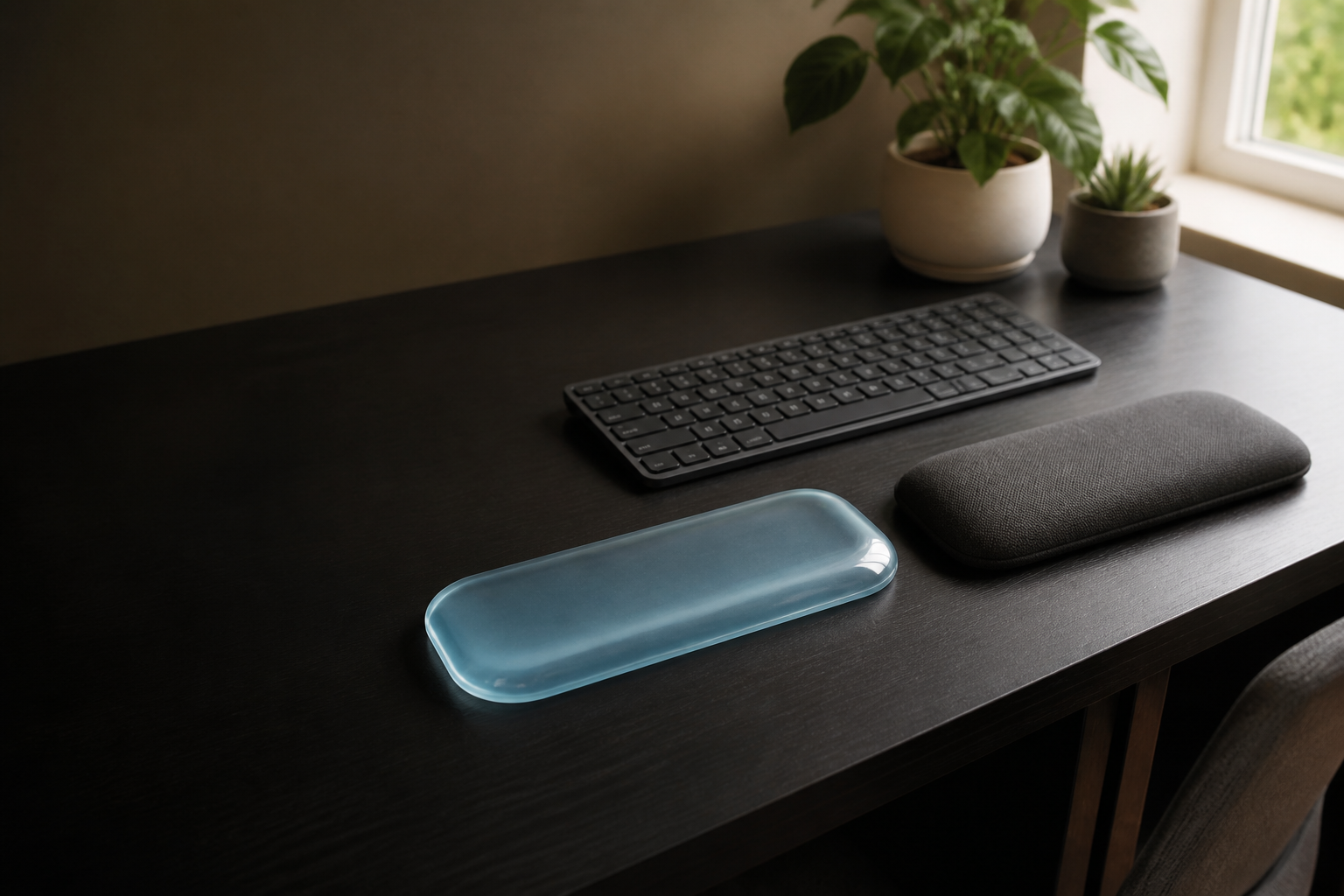
Choose desk tools by fit
Gel vs. Memory-Foam Wrist Rests
Choose gel when wipe-clean care and less sink matter most. Choose memory foam when you prefer a soft fabric surface and slow cushioning. In either case, fit the height before choosing the material.
Bottom line: match the height first
- Gel: often easier to wipe and available with less sink.
- Memory foam: for people who prefer a soft fabric feel and slower compression.
- Either: do not plant your wrists on the pad while typing; use light palm support during pauses.
01 · Check the fit
Do not raise the wrists above the keyboard edge
A pad that is too tall can bend the wrists upward. Measure the keyboard's front edge first.
Full-size, tenkeyless, and mouse rests need different lengths.
Adjust the chair and keyboard so the wrists can stay straight before adding a pad.
02 · Choose a material
Where gel and memory foam fit
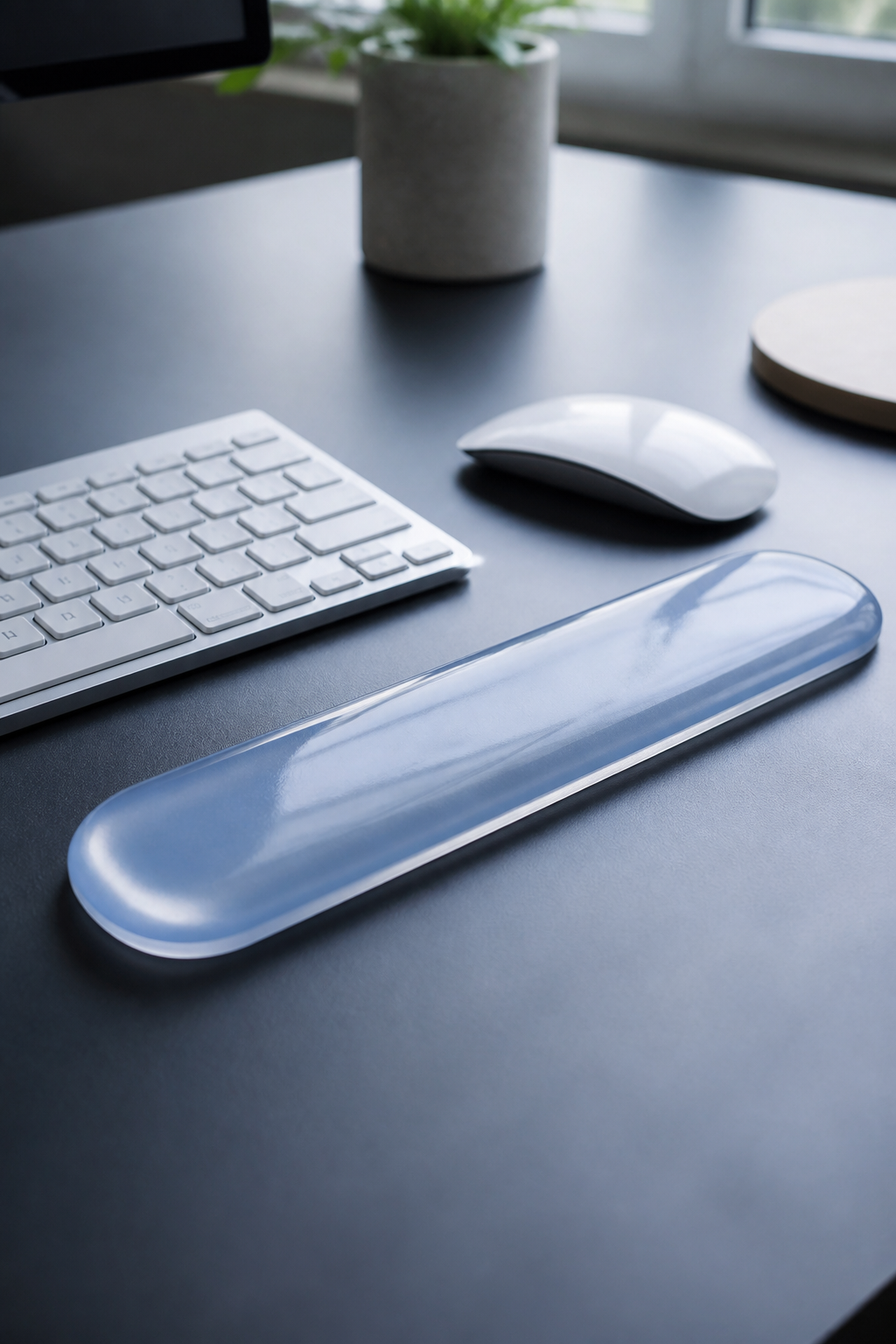
Gel fits frequent cleaning
Choose it if you want a surface that is easy to wipe or dislike fabric pilling. Check the actual cover, firmness, and dimensions because products differ.
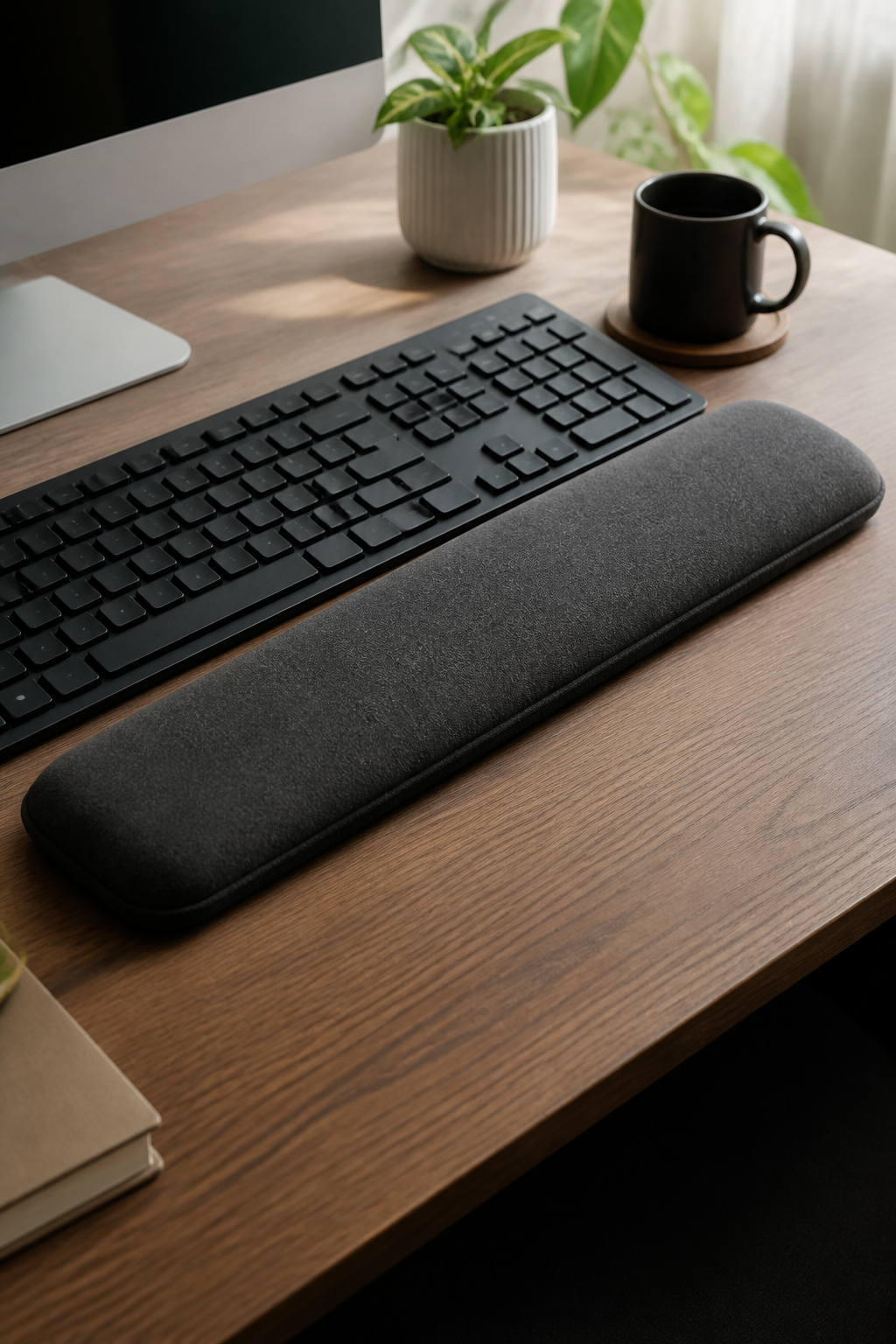
Memory foam fits a soft feel
Choose it if you prefer fabric texture and slow cushioning. Check care instructions and the compressed height after your palms settle.
These images explain use cases and do not make performance claims for a specific product.
03 · Use it correctly
A rest should not pin your wrists down
OSHA guidance prioritizes adjusting keyboard or chair height to keep the wrists neutral and reducing contact stress. If you add a rest, avoid pressing the wrist itself into it while typing; use light support closer to the heel of the palm during pauses.
Persistent pain or numbness: stop the task and seek appropriate medical or occupational-health advice instead of relying on an accessory.
04 · Skip it when
Do not buy one if workstation adjustment solves the problem
If chair, desk, and keyboard adjustments let your wrists stay straight, no extra accessory is necessary. Skip a pad that bends the wrists upward, concentrates pressure on the forearm, or reduces mouse range.
Sources checked August 13, 2026: OSHA Computer Workstations: Keyboards, CCOHS Keyboard Selection and Use, University of New Hampshire Keyboard Ergonomics, and HyperX product specifications. This article does not promise prevention or treatment of a medical condition.
Fit the height, then choose care or feel
Material comes second. Match the pad to the keyboard edge, then choose gel for wipe-clean care or memory foam for a softer fabric feel.